Learn how photovoltaic power transforms sunlight into clean electricity, supported by solar engineering services, project solutions, and sustainable energy innovations.
When the morning sun lights up your rooftop, have you ever wondered whether these warm rays could be converted directly into electricity to charge your phone or power your home? As the global energy transition accelerates, photovoltaic (PV) power has moved from laboratory research into millions of households, becoming a clean, economical and scalable energy solution. This article explores the science behind solar power and examines how PV systems—supported by modern engineering services, project development services, and integrated project solutions—turn sunlight into electricity.
1. The Core of Photovoltaic Power: A “Magical Encounter” Between Photons and Electrons
At its essence, photovoltaic power generation is a microscopic reaction that takes place within semiconductor materials inside solar panels. Contrary to common belief, solar panels do not generate electricity by absorbing heat. Instead, they rely on the photovoltaic effect, discovered in 1839 by French physicist Edmond Becquerel.
Most modern solar panels use monocrystalline or polycrystalline silicon. These materials contain free electrons that can be activated when photons strike the surface. Once excited, these electrons generate direct current (DC), which is then converted into alternating current (AC) through an inverter—completing the transformation from sunlight to usable electricity.
Today’s solar installations often depend on engineering consulting services, professional engineering services, and quality engineering services to ensure panel performance, system safety and long-term reliability. Even in cloudy weather, diffused light can trigger electron movement, allowing PV systems to function steadily across diverse climates.
2. From Experimental Luxury to Affordable Energy: Technological Breakthroughs Behind Solar Power
In the 1970s, solar panels were extremely expensive—costing tens of dollars per watt and used mainly in aerospace. Today, the cost has dropped below $0.20 per watt, making solar one of the most competitive energy sources worldwide.
Efficiency improvements have played a key role. Monocrystalline silicon cell efficiency has increased from 10% in early generations to over 26% today. Meanwhile, new technologies like thin-film and perovskite solar cells are rapidly advancing, with perovskite efficiencies surpassing 30%.
Behind this progress is the contribution of solar engineering companies, custom engineering solutions, and outsourced engineering services that support R&D, module manufacturing, and system optimization. Large-scale industrial growth—especially in China—has further reduced the cost of silicon materials, inverters, and balance-of-system components.
As a result, a household PV system today often has a payback period of just 5–8 years, while the system lifespan reaches 25–30 years. For companies, engineering service providers and project solutions specialists play a crucial role in ensuring system integration and cost efficiency.
3. Beyond Rooftops: Diverse Applications of Photovoltaic Technology
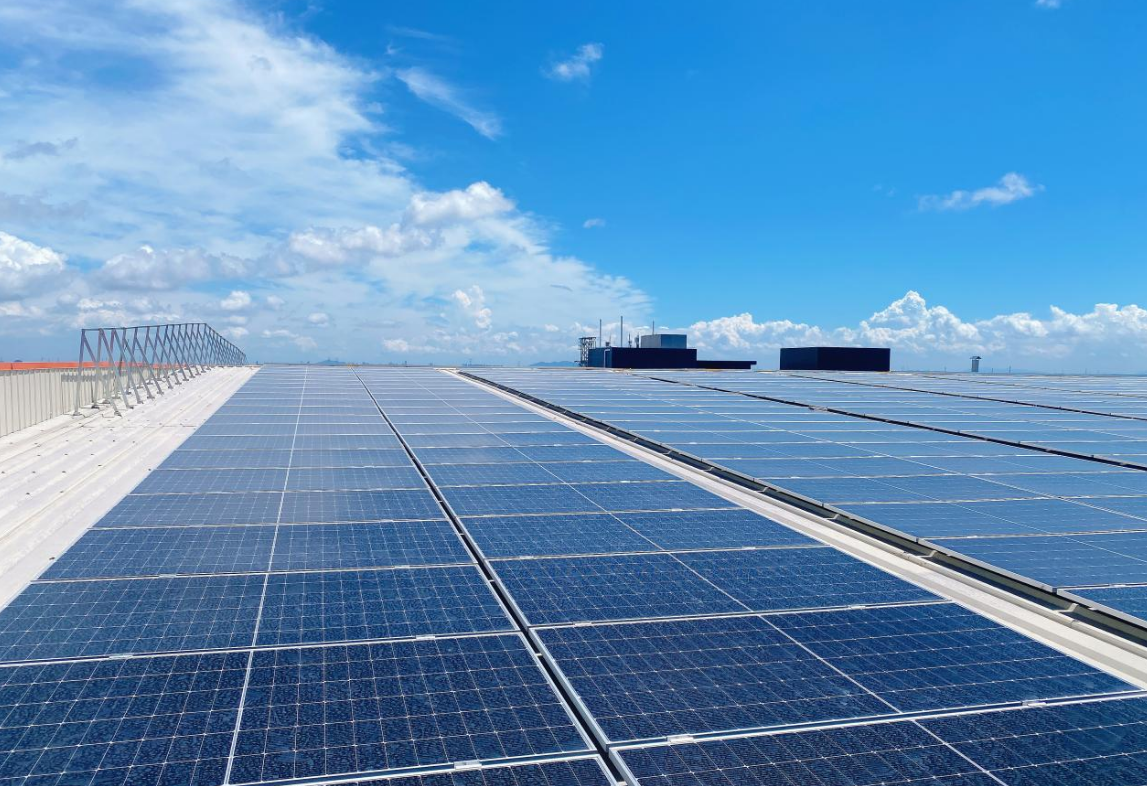
When people think of solar power, they often picture rooftop solar arrays. However, modern PV technology has expanded far beyond residential roofs into various sectors of society.
Urban Applications
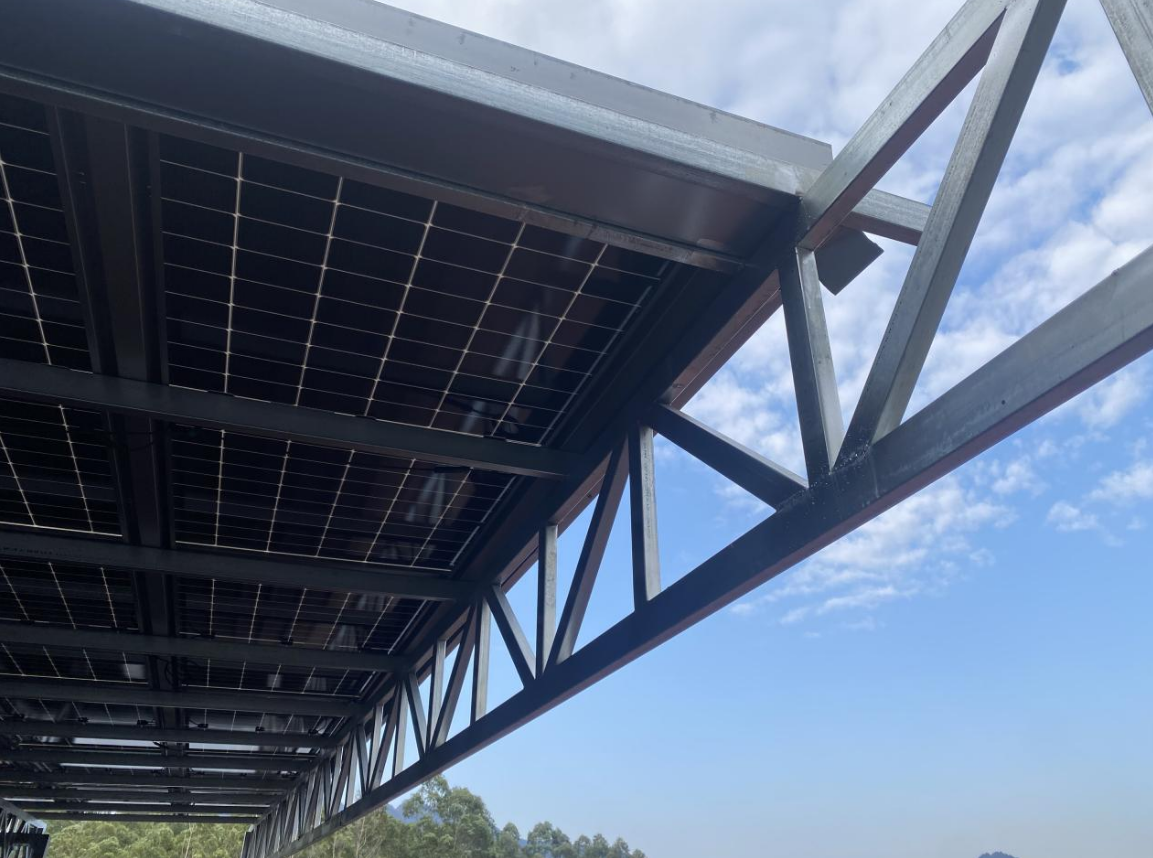
Building-Integrated Photovoltaics (BIPV) integrates solar panels into façades, roofs, and shading structures. Implementing BIPV requires coordinated construction project management services, engineering services companies, and construction project management solutions to ensure both architectural compatibility and energy performance.
In places like the Shanghai Expo’s “Sun Valley,” BIPV installations generate over 1 million kWh of electricity annually.
Remote Regions
In remote or off-grid areas, PV systems serve as essential infrastructure. Small household solar units have helped families in Tibet and Qinghai achieve reliable electricity access without diesel generators. Worldwide, solar energy now provides basic power for more than 1 billion people, showcasing the importance of coordinated project management services and integrated project solutions.
Industrial Scale
Large-scale solar farms—such as Saudi Arabia’s 2.1-GW Red Sea Solar Project—require advanced power engineering solutions, service engineering, and engineering services to achieve stable energy output. As solar + storage solutions mature, daytime excess energy can be stored and used at night, improving grid stability.
4. Environmental and Economic Benefits: The Sustainable Value of Photovoltaics
One of solar energy’s greatest strengths lies in its environmental benefits. Unlike coal-fired power plants, PV systems emit no CO₂, SO₂, or other pollutants during operation. A 1-kW solar installation reduces approximately 1 ton of CO₂ per year, equivalent to planting 10 trees.
For homeowners, solar energy reduces utility bills, and surplus electricity can be sold back to the grid. For enterprises, installing solar power improves sustainability credentials and supports carbon-neutral commitments. Many PV projects rely on project management services, custom engineering solutions, and engineering services companies to ensure long-term operational efficiency.
The solar industry also stimulates employment across mining, module manufacturing, installation, and maintenance. In China alone, the PV sector employs more than 3 million people, forming a robust industrial ecosystem.
5. A Promising Future: Key Trends in Photovoltaic Development
Thanks to continuous innovation and global policy support, the future of photovoltaic power is filled with potential. By 2030, solar is expected to supply over 20% of global electricity—becoming the world’s largest power source.
Technological advancements continue rapidly. Tandem cells combining perovskite and silicon could push conversion efficiency above 40% within five years. Storage costs will fall further, making solar + storage cheaper than coal.
Countries worldwide—more than 130 in total—have pledged carbon-neutral targets. This is driving strong demand for project development services, engineering service providers, and integrated project solutions to support national energy transitions.
China aims to achieve carbon neutrality by 2060, with total PV installations expected to exceed 1.2 billion kW by 2030.
From Becquerel’s discovery of the photovoltaic effect to today’s widespread adoption of solar energy, humanity has spent nearly two centuries harnessing sunlight. This powerful natural resource is reshaping our energy systems, supporting global sustainability goals, and redefining our relationship with the environment. Perhaps in the near future, when we look up at the sun, we will not just feel its warmth but also recognize it as a source of limitless clean electricity—the most profound change solar power brings to the world.
